
Testing multimodal telerehabilitation in two patients with DMD
AUTHORS:
Parravicini S1,2, Gardani A2 , Vacchini V2, (tesista?), Berardinelli A2
1) Department of Brain and Behavioral Sciences, University of Pavia, Pavia, Italy
2) Pediatric Neuroscience Center, IRCCS Mondino Foundation, Pavia, Italy
ABSTRACT:
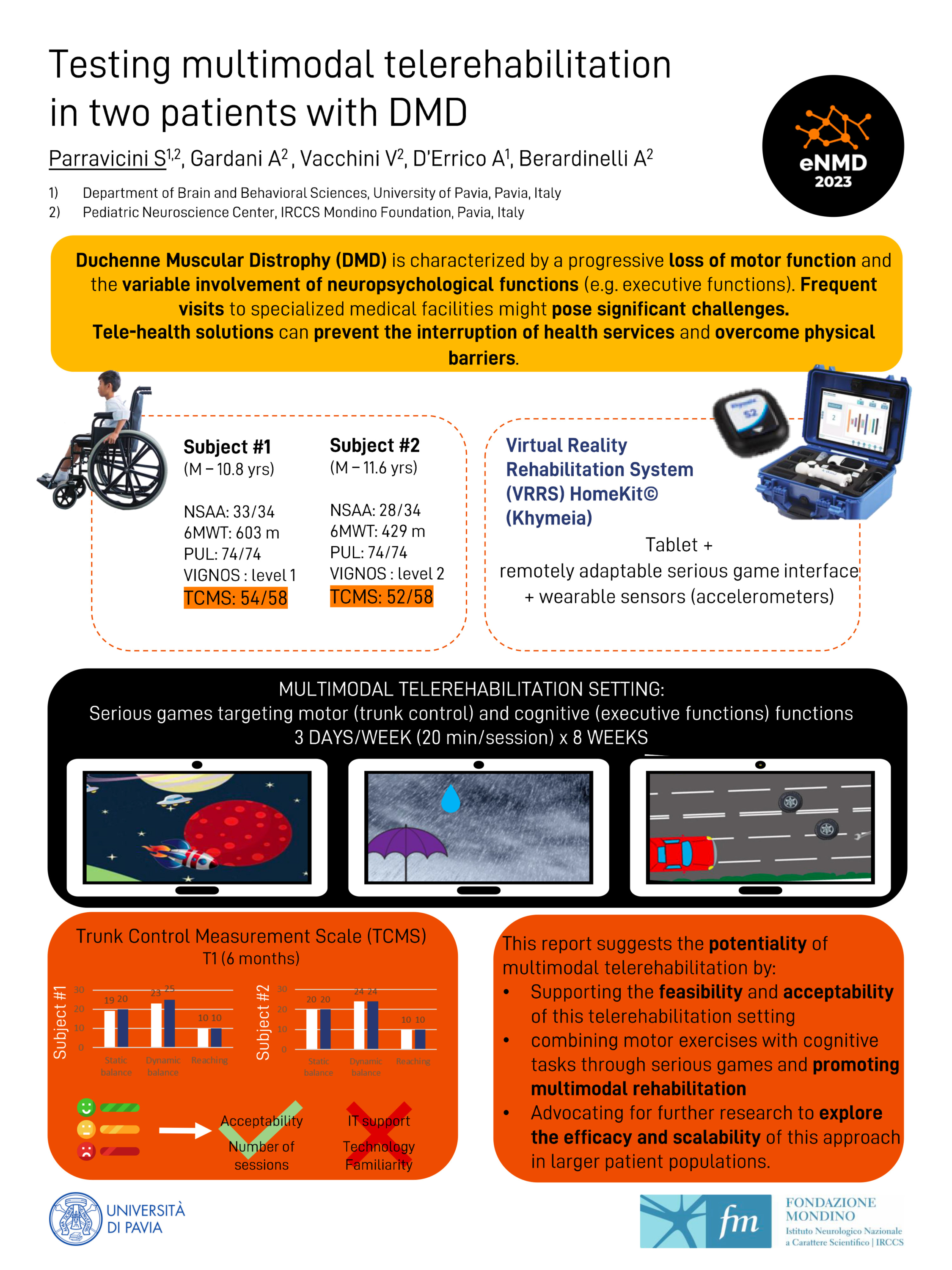
Duchenne Muscular Distrophy (DMD) is a muscular disorder characterized by a progressive loss of motor function and the variable involvement of neuropsychological functions (e.g. executive functions, memory, and language). The clinical follow-up of DMD patients involves regular visits and rehabilitation sessions. However, frequent visits to specialized medical facilities might pose significant challenges for neuromuscular patients due to their motor impairment. As we experienced during the COVID-19 pandemic, implementing tele-health solutions has a key role in preventing the interruption of health services and overcoming physical barriers.
We adopted the Virtual Reality Rehabilitation System (VRRS) HomeKit©, developed by Khymeia, to test a multimodal tele-rehabilitation setting in two children with DMD targeting motor (trunk control) and cognitive (executive functions) functions. The device consists of a tablet with a remotely adaptable serious game interface and wearable sensors. The introduction of the device was well tolerated by the patients and their families, and it facilitated a rehabilitative intervention that reduced the burden of traveling to the clinical center in terms of time, physical effort and costs.
Besides, our report suggest the potentiality of multimodal rehabilitation. By combining motor exercises with cognitive challenges through serious games, the device promotes holistic rehabilitation for DMD patients. The preliminary results of the study demonstrate the feasibility and acceptability of the tele-rehabilitation device and highlight its potential in enhancing the motor and cognitive functions of children with DMD. Further research is needed to explore the long-term efficacy and scalability of this approach in larger patient populations.

